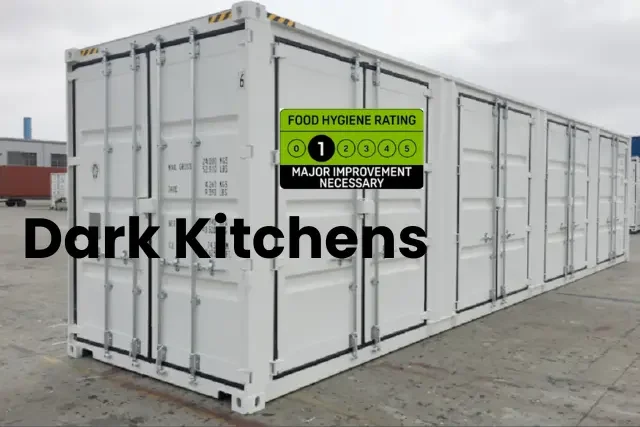
The food delivery boom has created a new kind of food business: the dark kitchen—also known as a ghost kitchen or cloud kitchen. Popular with convenience-driven consumers, these delivery-only outlets are disrupting the traditional takeaway model. Although dark kitchens represent the future of online food delivery, there are growing problems with the food safety regulation of dark kitchens in the UK.
In this post, we reveal the key enforcement gaps, compliance challenges, and food safety risks every dark kitchen operator needs to know in 2026.
Table of Contents
What is a dark kitchen ❓
A dark kitchen is a commercial food business that prepares ready-to-eat meals for delivery, without any customer-facing storefront or dine-in option. These kitchens focus primarily on food delivery, usually through third-party platforms like Just Eat, Uber Eats, or Deliveroo, but sometimes via their own websites, apps, or social media.
There hasn’t been a single agreed definition for dark kitchens until recently, and the terminology is often confusing. Varying words are used to describe similar operations (see list below):
🔹 ghost kitchen 🔹 cloud kitchen 🔹 virtual kitchen 🔹 remote kitchen 🔹 shadow kitchen 🔹 cyber kitchen 🔹 delivery-only restaurant
However, the key feature is that customers cannot order in person or eat on site—the entire experience is delivery-focused.
Consensus definition of dark kitchens
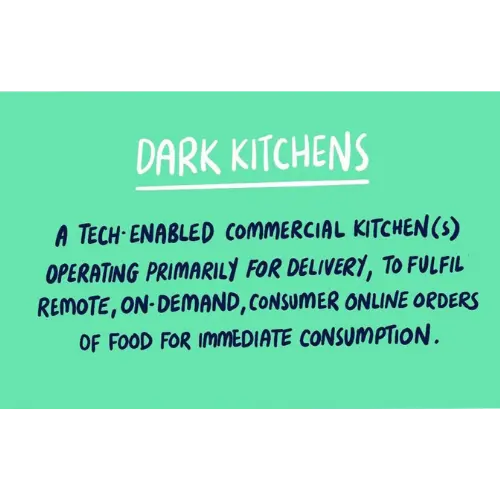
A new research study by Nield et al. (2025) defined dark kitchens as:
What is not a dark kitchen ❓
According to the definition by Nield et al. (2025) the following do not qualify as dark kitchens:
🔹 Traditional restaurants or takeaways
Any business with an in-house menu and a physical ordering point for customers—even if they also offer delivery.
🔹 Home delivery services for vulnerable groups
Services like ‘meals on wheels’ that provide tailored meals for vulnerable people, or require a regular subscription (rather than on-demand ordering).
🔹 Home bakers and private caterers
Individuals or businesses who:
Require advance orders
Deliver their products directly to customers (not via a delivery platform or as an on-demand service)
🔹 Any business with a public-facing, walk-in service
If customers can visit, order, and interact with staff on site, or if all menus are public-facing (not hidden as a virtual delivery brand), it’s not a dark kitchen.
Did you know❓
What does the ''dark'' in dark kitchen refer to?
It refers to how dark kitchens operate - “out of sight” from the public, with no walk-in service.
Where are dark kitchens found❓
Dark kitchens are typically located in non-residential urban areas — from industrial estates to car parks beneath flyovers. These units are designed for high throughput and rapid delivery to local customers.
Increasingly, under-used commercial kitchens are being repurposed. Community halls and wet-led pubs may rent out their kitchens to operators, and even hotels are now leasing their kitchens for use as dark kitchens.
Home-based kitchens are growing in popularity, operating inside houses or apartments rather than dedicated commercial spaces. However, home-based kitchens do not come under the agreed definition of a dark kitchen where food is ordered in advance of the requested delivery time.
How does the dark kitchen business model work ❓
The shapes and sizes of dark kitchens vary widely. Some units are wholly owned. Others are leased by established food businesses to boost capacity or expand into new areas. You will find dark kitchens run by single operators with a single shipping container run as an on-line only brand. But co-working is also popular.
Typically one single dark kitchen can be rented to several “virtual brands” at once. Each with its own menu and name, all listed separately on food delivery apps. For example, Deliveroo editions may house 20-30 virtual brands under one roof.
What is the size of the dark kitchen / cloud kitchen market❓
The UK food delivery market has doubled in value—from £7.6 billion in 2019 to £14.3 billion in 2025 (Lumina Intelligence). On-line food delivery has become a regular part of life for many.
In comparison, the global dark kitchen market is estimated to be worth £51 billion in 2023 (converted from USD). Forecasts suggest it could exceed £122 billion by 2030. Unsurprisingly, analysts suggest that dark kitchens could eventually command 50% of the global takeaway market.
What is the business case for a cloud or dark kitchen❓
The appeal of cloud or dark kitchens is simple. It offers lower overheads, easy access, speed, minimal risk, and flexibility (Laheri et al., 2025a).
1️⃣ Low Cost: Dark kitchens are sited at cheaper, urban locations. They eliminate the need for a dine-in area. This lowers cost—by saving on rent, front-of-house staff, and expensive fit-outs.
2️⃣ Efficiency: The efficiency it offers is important because it provides a fast route to market. New concepts can be trialled and scaled up—or closed down as required.
3️⃣ Less Risk: Unlike traditional restaurant leases, dark kitchens offer short-term agreements. Sometimes require three months upfront and three months’ notice. This is hugely attractive as it offers less financial risk.
4️⃣ Scalability: Lastly, dark kitchens have become a hotbed for innovation too. Ambitious start-ups, entrepreneurs and established chains all use dark kitchens as an affordable way to grow.
What is the problem in regulating dark kitchens❓
Local authority Environmental Health Officers (EHOs) are struggling to regulate dark kitchens. Not just because dark and cloud kitchens are hard to spot. But because UK food laws haven’t kept pace with this rapidly evolving business model (Laheri et al., 2025b).
One of the biggest problems is the lack of guidance from the Food Standards Agency (FSA). Without standards for dark kitchens—it will impact the way EHOs identify, inspect, regulate and enforce food hygiene law.
EHOs will end up interpreting requirements differently, resulting in mixed messages. It’s likely that hygiene ratings will be awarded inconsistently, leading to differences in food safety enforcement.
Did You Know?
What is the biggest mistake dark kitchen operators make before they launch?
Registering with the council BEFORE their HACCP documentation is ready!
Read this BEFORE launchingWhat are the food safety regulatory challenges for local authorities❓
🔹 Discoverability. It can be difficult for EHOs to identify and monitor dark kitchens. This is because they do not have a store front. And trading names get lost in apps that contain thousands of businesses.
🔹 Registration. EHOs don’t have time to track down every new dark kitchen or virtual brand popping up on delivery apps. Unregistered dark or cloud kitchens have become a significant problem for councils to regulate as dark or ghost kitchens fall through the cracks.
🔹 Multiple Trading Names. Multiple virtual brands from one kitchen often lead to duplicated registration records. This is an administrative headache for EHOs. It slows down food hygiene inspections, follow-ups and investigation of customer complaints.
🔹 Communication Difficulties. Language barriers or cautious dark kitchen operators make engagement tough.
🔹 Traceability & Outbreak Response. If the app’s trading name doesn’t match council records it hampers EHO investigations of food poisoning and traceability of food.
🔹 Working Hours. The operating hours of dark kitchens are often unknown. This makes it difficult for EHOs to schedule inspections.
What are the key food safety challenges for dark kitchen operators ❓
The food safety compliance challenges that dark kitchen operators face have been categorised into 1) Regulatory Compliance and 2) Food Safety Management or HACCP Challenges.
Regulatory Compliance
🔹 Food Safety Registration
Many operators are completely unaware of their legal duty to register a dark kitchen or ghost kitchen.
🔹 Registration Avoidance
Some social media sellers act as “ghost” sellers. These business owners avoid registration by selling through social channels and do not disclose a physical address.
If you’re selling food on Facebook, Instagram, or other platforms—even from your home—you must register as a food business. [Learn more in our guide to Registering a Food Business as a Social Seller.]
🔹 Fake Food Hygiene Ratings
Some social sellers display false stickers to gain trust from online customers, as explained in our post False Hygiene Rating (FHRS) Stickers – What It Means for You. This fuels the negative perception and public distrust of invisible dark kitchens.
Food Safety Management (or HACCP) Challenges
🔹 Premises & Layout. Shared kitchens might not have proper zoning or clear separation between raw and ready-to-eat food. This increases the risk of cross-contamination and makes HACCP compliance ineffective.
🔹 Hygiene & Cleaning. Standards often slip under the pressure of fulfilling multiple brands’ orders quickly. If one operator’s hygiene rating drops in a shared space, it can compromise food safety for all businesses operating there.
🔹 Allergen Control. With changing menus and multiple brands, documentation like allergen charts can fall behind reality. When menus are updated, it can take two days for changes to appear on the app, which puts customers at risk.
🔹 Staff Food Safety Training. Poor training can create serious risks for customers, especially for individuals with food allergies or intolerances.
🔹 Transparency For Customers. Unless businesses publish their Food Hygiene Rating online, customers are left in the dark about food hygiene standards. They may not know that all ratings are displayed online on the FSA’s website.
🔹 Lack of Accountability. In shared dark kitchens, it’s not always clear who is responsible for food safety and hygiene on a day to day-to-day.
In summary, food safety compliance gaps in dark kitchens can have severe consequences for customer safety. To ensure the success of a dark or ghost kitchen – regulatory compliance needs to be taken seriously.
What practical steps can dark kitchen operators take right now❓
As a responsible operator, you can protect your business reputation and the safety of your customers by prioritising the following actions:
🔹 Keep registration and trading names up to date. Make sure every virtual brand is linked to your main business registration. Inform your council when launching a new dark kitchen.
🔹 Be transparent with your Food Hygiene Rating. Publish your rating on your website and all app profiles—don’t leave customers guessing. Customer trust is key for your business to survive and grow.
🔹 Consider use of a Ghost Kitchen Trust Passport to increase visibility, boost transparency and improve customer confidence in your brand. Customers will value seeing your food hygiene rating and other food safety information embedded into a QR code. You’ll keep the enforcing authority happy too, in terms of food traceability.
🔹 Stay on top of allergen management. Provide an accurate, up to date allergen matrix for your brand. Every menu or brand change should trigger an allergen review and a staff briefing. Don’t forget delivery drivers – they have an important role to play in allergen management too.
🔹 Design kitchens for safe flow. Use clear zoning and colour coding to keep raw and ready-to-eat foods separate. This is especially important in shared or cramped spaces.
🔹 Build cleaning and HACCP monitoring checks into daily routines. Don’t let standards slip during the rush. Assign roles and set reminders.
🔹 Invest in regular training. Keep refreshers short and relevant—especially for agency or temporary staff. Use food safety culture and behaviour change to boost staff compliance. Especially important as staff are unsupervised.
🔹 Keep documentation real. Food safety paperwork must reflect what’s actually happening on the ground—not just what’s written in your Food Safety Management System or Safer Food Better Business pack.
By following these steps you will not only protect your customers—but your inspections with the regulator will be smoother too.
If you are worried about your next EHO visit, read our EHO Survival Guide to learn how to make a good impression.
Setting Up A Dark Kitchen❓
There is one common mistake that business owners make when they set up a new business and this relates to Food Business Registration. Don’t let this happen to you because it will affect your food hygiene rating. Start your dark kitchen the right way. Read our post: How to Prepare for Your First Food Hygiene Inspection – Avoid This Common Mistake.
Final Thoughts
Dark kitchens aren’t going away — but the law and official advice need to catch up. Until then, businesses that prioritise transparency, and tighten their food safety compliance will be best placed to protect public safety, avoid pitfalls, and build customer trust.
Book a Clear Path to Compliance call for expert, practical advice—tailored to your dark kitchen.
Or get in touch: [email protected] Call us on: 02920 026 566

Dr Julie Rasmussen
Frequently Asked Questions (FAQs)
How do we show our Food Hygiene Rating with no shopfront❓
🔷 Publish your Food Hygiene Rating on your website, delivery app profiles, and social media pages.
🔷 Use a QR code on packaged food orders – a Ghost Kitchen Trust Passport.
This keeps customers informed, demonstrates food safety compliance and transparency and builds customer trust, engagement and loyalty.
Do virtual brands need separate registration❓
No. However, all trading names — including ghost, cloud, and shadow brands — must be linked to your registered premises and kept up to date with your local authority. This ensures compliance under UK food safety regulations.
What if our app brand doesn't match our registered business name❓
Inform your local authority of all trading names, and make sure your Food Hygiene Rating is linked to the names customers see on delivery platforms. This avoids confusion and ensures ratings are correctly displayed.
Are home-based social media dark kitchens allowed❓
Yes — but you must register with your local authority and comply with food safety regulations. Home kitchens are inspected in the same way as commercial premises. For more on this, read our guide Registering your food business as a social seller.
Related Reading
Here are some other posts you might be interested in reading:
🔷 Food Hygiene Inspections Frequencies Are Changing (Wales) – What To Expect? [Updated Oct 2025]
🔷 Do Environmental Health Officers Have a Right of Entry? | EHO Powers Explained
🔷 Zero Food Hygiene Rating: Legal Notices Served – A Cautionary Tale
🔷Food Hygiene Rating Crisis? What To Do When Your Hair’s On Fire
References
Food Standards Agency. (2021). Food in the digital platform economy – making sense of a dynamic ecosystem. Accessed on-line on 6 Oct 2025 from https://www.food.gov.uk/sites/default/files/media/document/Platforms%20ExecSumm%20FSA%20May%202021_accessibility_checked.pdf.
Laheri, Z. et al. (2025a). The rise of dark kitchens: Characteristics and operational challenges. International Journal of Gastronomy and Food Science 40, p 101142.
Laheri, Z. et al. (2025b). ‘Going dark’ or under the radar? Challenges and opportunities for local authorities and dark kitchens in ensuring food safety. Food Control. 172, p. 111179.
Nield et al. (2025). What are ‘dark kitchens’? A consensus definition from public, local authority, business and academic stakeholders in the United Kingdom. Perspectives in Public Health. Published on-line on 23 Sept 2025. Accessed on-line on 7.Oct. 2025.